Conservation And Enhancement Of Artistic And Historical Heritage:
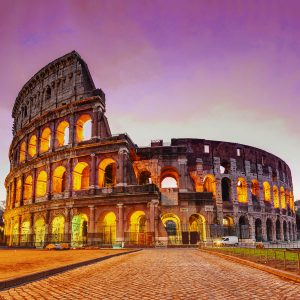 The notion of heritage is, at present, the general, at least in its essential postulates, the diuso current, which does not seem to need further clarifications. In it, in the meantime, you should generally be understood “things” carry the meaning of objective evidence of civilization (and, especially, of past civilizations); so that more properly speak of ‘historical and artistic heritage’, intended to sense with expand that sense as well as the specificity of the aesthetic qualification of the individual “things”.
Other essential postulate is that this legacy is “common” so relevant to those individuals, or limited social groups, that of individual things or combinations of these are, in fact, a valid title holders, but to the community, in fact, in broader sense and all-encompassing. From this it follows that even the notion of historical and artistic heritage is taken by the community to justify their behavior, actions, providences (technical, legislative etc.) Aimed at housing, exploitation, dissemination and appreciation of the conservation of the heritage : acts, all of them, that even when they do not match the behaviors and interests of the individual owners, but they overlap or even conflict prevail or are entitled by virtue of this assumption, then, notwithstanding other instances of positive law its the same community.
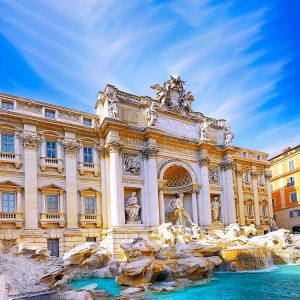 It would seem, then, from the path of these basic characteristics, the concept of historical and artistic heritage is an undisputed and indisputable benchmark of civilized society, the final acquisition of the public consciousness. And, therefore, the finding of flagrant and everyday low ability to Codest public behavior, activities and allowances to translate their statements of principle in ways that actually acts to achieve their specific objectives (ie to better conserve, learn about and appreciate the historical and artistic heritage ) is not only a sign of inadequacy “techniques” of defaults or simple conflicts of interest. That is but a symptom (but more than symptom often already as irrefutable confirmation) radical shortcomings and ambiguities, even at the limit of a relative but significant drop of meaning, of the notion of historical and artistic heritage, as it has been handed down , and its current conceptual positions.
The emergence of these shortcomings and ambiguities has also helped to stimulate a debate that he set in motion just in the last decade and still in progress, the result is aimed at a renewed conceptualisation of the object (the historical and artistic heritage, in fact) in a view that is not only the specific disciplines of archeology and art history, but at least it expands the boundaries of the social sciences.
But since, as we have just said, this debate is still going on, nor is it possible to anticipate the outcome, it will be here in the first place useful reconsideration – albeit briefly – the reasons for which the already generalized notion of heritage and art began to recede.
One reason is already inherent in the use of the term “assets” to the contradictory semantics of this. In fact, for it is meant to be a part of what has been handed down by patres vocabulary (the bran, Venice 1612), that is what one makes traditio and tangible link to an ethical-social, a connotative sign of the person and the community therefore, with its well-defined boundaries, and not even all that is currently owns, also for new acquisition of the subject. In other, more common sense the term denotes an accumulation of goods, stocks especially valuable, virtually negotiable, and to which the powers of the “historical” and “artistic” are not enough, nor to provide that ideal and symbolic meaning that is characteristic of ‘other sense, nor to give universal value, as clearly did not pertain to the’ things’ which make up the patrimony, but they are, in fact, “powers” the result of a tripped recognition of an acquired or reacquired awareness, in short, a critical judgment.
One reason is already inherent in the use of the term “assets” to the contradictory semantics of this. In fact, for it is meant to be a part of what has been handed down by patres vocabulary (the bran, Venice 1612), that is what one makes traditio and tangible link to an ethical-social, a connotative sign of the person and the community therefore, with its well-defined boundaries, and not even all that is currently owns, also for new acquisition of the subject. In other, more common sense the term denotes an accumulation of goods, stocks especially valuable, virtually negotiable, and to which the powers of the “historical” and “artistic” are not enough, nor to provide that ideal and symbolic meaning that is characteristic of ‘other sense, nor to give universal value, as clearly did not pertain to the’ things’ which make up the patrimony, but they are, in fact, “powers” the result of a tripped recognition of an acquired or reacquired awareness, in short, a critical judgment.